
What Sun-Grown Cannabis Means
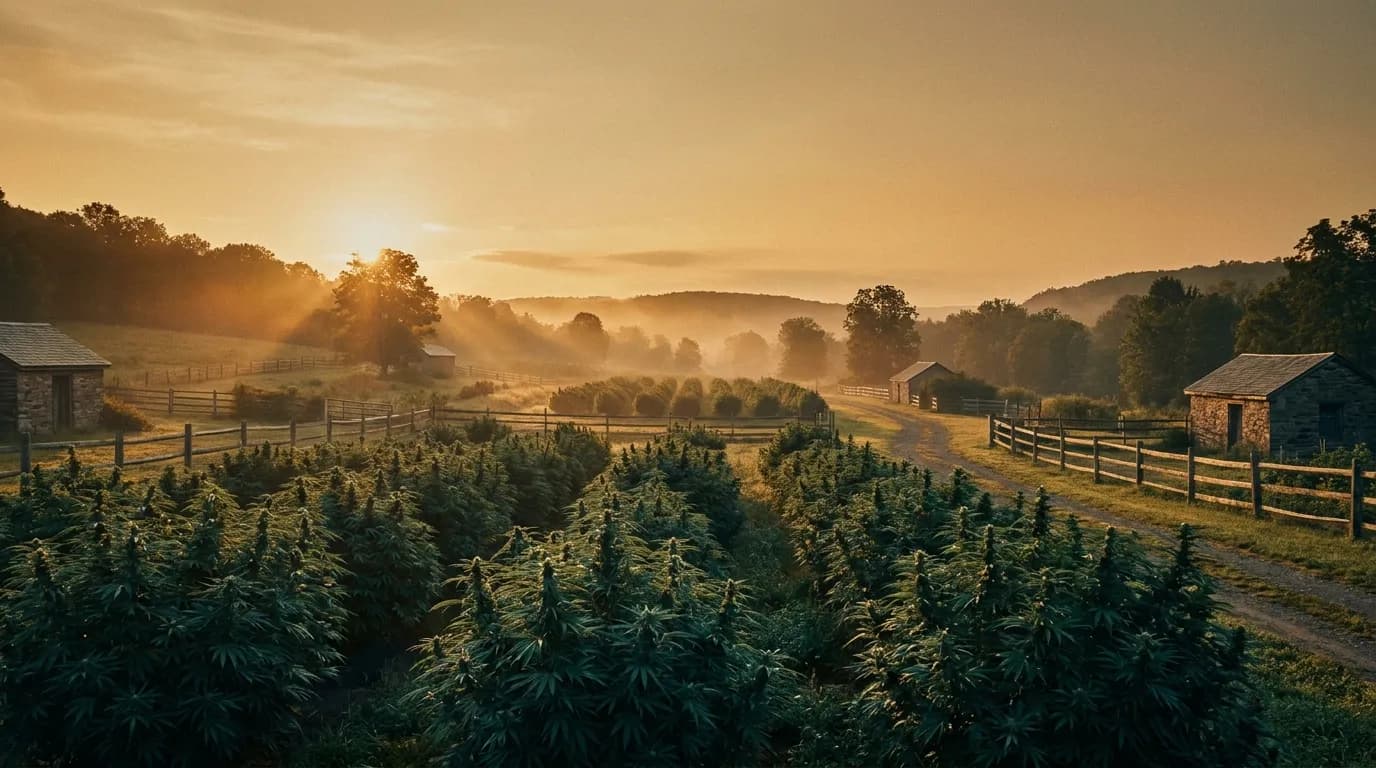
Sun-grown cannabis is grown outdoors under natural sunlight instead of indoor grow lights. The plants follow the natural New York season: planted in late spring, growing through the summer, flowering as the days shorten in late summer, and harvested in October.
A few things tend to be true about sun-grown relative to indoor flower. It gets full-spectrum natural light, which can bring out terpene expressions that indoor lighting handles differently. Yields per plant are usually higher outdoors, which tends to lower the cost per gram. The bud structure is often a little looser and less dense than indoor. Many daily-use consumers find the price-to-quality ratio hard to beat.
October Harvest, Spring Release
New York's outdoor crop comes off in October. From there it dries and cures for several months before it is ready to sell, which is why fall-harvested flower shows up on shelves the following spring. The cure matters for outdoor flower in particular: as it cures, chlorophyll breaks down, the terpenes settle into a rounder profile, and the harsh green flavor of fresh-cut plant fades.
How Sun-Grown Differs From Indoor And Greenhouse
The three growing methods produce different flower even from the same genetics.
Indoor. Climate-controlled rooms with artificial lighting. Usually the densest bud and the most consistent look, and typically the most expensive per gram. Available year-round because of rolling harvests.
Greenhouse. Glass or poly structures using natural light, sometimes supplemented or extended with lamps. Generally a middle tier on both price and appearance, with several harvests a year.
Sun-grown. Fully outdoors on natural light alone. Often looser and more weather-influenced, usually the lowest price per gram, and a single annual fall harvest. It tends to suit cost-conscious daily consumers and people who like the terpene character that comes with full-spectrum sunlight.
How To Consume Sun-Grown Flower
Sun-grown flower is used the same way as any other flower. Grind it, then roll a joint, pack a bowl, or load a dry-herb vaporizer.
Some people notice small differences. Looser bud can burn a bit faster in a joint or pipe. The terpene character often reads as fuller on the inhale. At the same THC level, the effect itself is comparable to indoor or greenhouse flower.
Sustainability Consideration
Growing outdoors uses far less energy than growing indoors. Indoor cannabis is energy-hungry because of the lighting, climate control, and ventilation it needs. Sun-grown relies on natural light and airflow, so its energy use per gram is much lower. If a smaller footprint matters to you, sun-grown is the lower-energy option.
How To Identify A Quality Sun-Grown Lot
Good sun-grown flower usually shows these signs:
Visible trichome coverage, even at lower density. The frosty resin heads that carry the cannabinoids and terpenes should be visible on the bud.
A strong, complex aroma when the jar opens.
A proper cure texture. The flower should feel slightly springy when you squeeze it and snap rather than crumble to dust when you break a piece.
A readable Certificate of Analysis. The lab report should show cannabinoid and terpene numbers plus clean results for pesticides, heavy metals, and microbials. Every product on a licensed New York shelf ships with one.
The Hudson Valley And Finger Lakes Terroir Conversation
One of the more interesting stories in New York cannabis is terroir. The same cultivar grown at a cool, higher-elevation Hudson Valley field can express differently from one grown in a warmer, lower Finger Lakes field, the way wine regions have understood for a long time. Elevation, night temperatures, and soil all leave a mark. It is a real reason to ask a budtender where a given lot was grown, and to try the same cultivar from different regions when you can.
Why The Cure Window Matters For Sun-Grown
Outdoor flower needs time before it is worth selling. Freshly cut plants hold a lot of water, so they first dry down over a couple of weeks in a humidity-controlled room. Then comes the cure, which is where the flower goes from merely dry to genuinely finished: chlorophyll degrades, the terpenes integrate into a stable profile, and the raw grassy edge softens into something rounded.
A lot rushed to the shelf too soon smokes greener and harsher than the same lot given a full cure. Cure rooms are typically held at controlled humidity and temperature, and growers "burp" sealed containers regularly in the early weeks to release built-up gases and re-equalize moisture. The cure is done when the aroma settles and the grower judges the lot ready. That is the main reason fall-harvested sun-grown does not show up until spring.
The Cost Story For Daily Drivers
For a daily flower consumer, the appeal of sun-grown is mostly the price. It usually sits at the value end of the shelf, below indoor and often below greenhouse, so if you go through flower steadily, it stretches your budget further over a month. For weekend-only or special-occasion buyers, premium indoor can make more sense, since the extra flavor depth and denser appearance matter more when you are not buying much. If you want the exact price on any lot, it is on the live menu.
Sun-Grown In The Joint Versus The Vaporizer
Sun-grown behaves a little differently across methods. In a joint or pre-roll, the looser structure tends to burn a touch faster than dense indoor flower, which some people actually prefer for a shorter session. In a pipe or bong it packs differently and can pull a little cooler.
In a dry-herb vaporizer, sun-grown often shines, because a broad terpene profile can express well at lower temperatures where narrower, single-note indoor cultivars can feel flat. If you vape flower, sun-grown is worth a try.
What To Skip If You Want Sun-Grown Quality
A few things to avoid when you are shopping sun-grown. Skip any lot with no readable COA. Skip anything that smells dusty, hay-like, or chemical instead of rich with terpene character. Skip flower that crumbles to powder when you break a small piece, since that usually means it was over-dried or is simply old. And ask the budtender for the harvest date, the cure time, and the COA before you commit to a jar.
Where To Find The Current Lots
Which sun-grown lots we have in stock changes as growers release them and inventory sells through. The live menu on thealchemy.nyc shows what is available at each store right now. You can also come into Chelsea or Flatiron and ask a budtender what sun-grown is on the shelf this week.
The Alchemy Editors
Field notes from the counter at Chelsea + Flatiron.
Written by our procurement and budtender team. Every claim verified against NYS OCM regulations and current shelf inventory. Updated as the menu rotates.
Continue reading
Next from The Alchemy Journal.
Cannabis And Travel In New York
Travel adds complexity to cannabis use. Federal law, interstate law, and local jurisdictional law all apply, and they do not always align. This page covers what NYC visitors and NYS residents need to know about cannabis and travel, including air travel, interstate travel, public transit, and rideshare.
How To Tell If Cannabis Is Fresh
Freshness has a big effect on how cannabis flower looks, smells, and burns. Even good genetics can end up as a poor product if the flower was cured badly, sat around too long, or got hit with heat, light, or air. This page walks through how to check freshness using what you can see, smell, and feel.
Cannabis Storage Guide
How you store cannabis affects its quality, safety, and shelf life. Good storage holds potency, keeps the smell and flavor intact, and prevents mold. Poor storage does the opposite and shortens the useful life. This page covers storing flower, edibles, concentrates, vapes, and pre-rolls.